The Foundations Nobody Counts
What a year of caregiving taught me about resilience, and why 2027 will test it
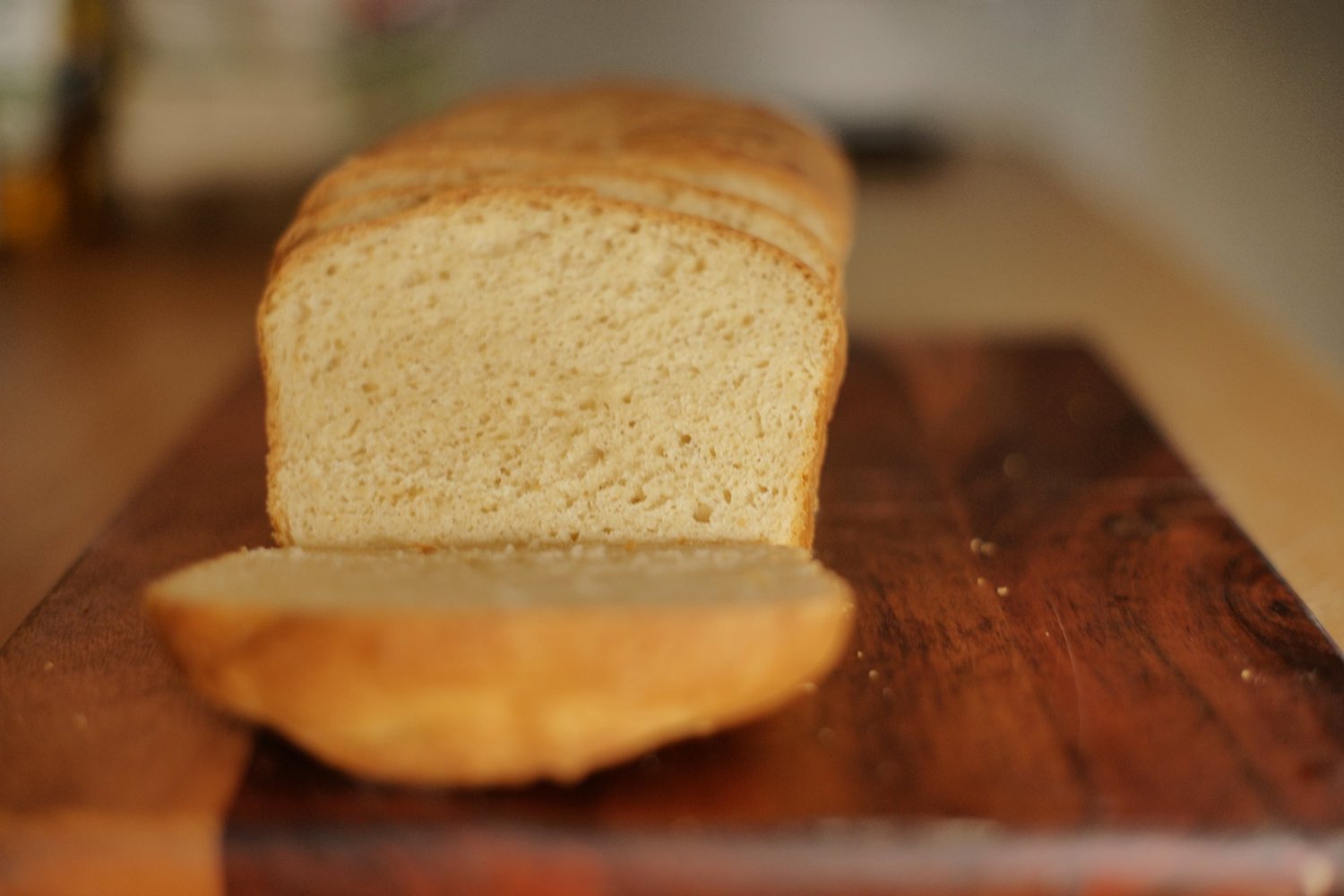
Our homemade bread. I learnt to bake it with AI as my teacher, one small way we've become more self-reliant.
TL;DR: The shocks of 2027 will land on the things nobody counts: the people who quietly absorb them, the nature that cushions them, and the spare capacity and margin that soak them up until they run out. Many organisations have no one in charge of those, and the first job is to find out who is. Those that count them first will also find the opportunity.
Uncounted - the short version in your inbox every week, with one shock many leaders haven't seen coming and what it means for your portfolio, your organisation or your household, and where the opportunities are. Subscribe at uncounted.news.
In brief
- Forecasters expect what could be the strongest El Niño in living memory, and the UK government has launched a three-year campaign telling households to stock up. The biggest risk isn't the weather itself; it's the foundations nobody counts: spare capacity, maintenance, care, nature and the people quietly absorbing shocks.
- A year of caregiving led me to realise I'd accidentally become our household's chief resilience officer, asking the same questions I put to boards: which shocks could reach us, where are the gaps, and what can we afford to change first?
- Resilience is also one of the biggest new markets of our lifetimes. Almost half of the world's largest listed companies already sell products that help customers adapt, and adaptation revenues could reach $4 trillion by 2050. Many portfolios, insurers and pension funds still aren't pricing it.
In late October, the UK government launched Be Ready, a three-year campaign asking every household to keep three days of food, water and supplies at home: nine litres of water per person, tinned food, a battery or wind-up FM radio, and cash in case payment systems go down. The prime minister said unexpected events seem to be becoming more common. As he spoke, storms were cutting power in Cornwall, and forecasters expect what could be the strongest El Niño in living memory this winter. That's the Pacific weather pattern that can disrupt harvests, shipping and food prices around the world. As the Met Office's chief meteorologist told business leaders this autumn: "We don't get normal weather any more, fundamentally."
Britain isn't alone. The EU now asks every household to be ready to cope alone for at least 72 hours. Sweden has sent more than five million households a booklet called In case of crisis or war. In the US, the official advice is to keep supplies to last at least three days. Wherever you live, the message is the same: for the first few days you're on your own, and the systems you rely on are thinner than you think.
When I read the stockpiling advice, my first thought wasn't about the weather. It was: carers have been doing this for years.
My second thought was a question I now put to every board I meet. Who is your chief resilience officer? Not the person who owns the risk register. The person who knows what's quietly carrying the weight in your organisation, and whether it will hold when the load gets heavier. If the answer is silence, or five people each holding one piece, that's your biggest gap, and 2027 is going to find it. I don't mean a new job title. I mean someone who can answer the question.
The year I learned what resilience actually is
For over a decade I've spoken in more than 20 countries, to hospitals, insurers, governments and pharmaceutical companies, helping leaders make sense of what's coming: first in digital health, then planetary health, and now climate adaptation and resilience.
My family's care needs grew, and much more of my attention was pulled home. I kept working throughout, with engagements and research fitted around everything else.
At first I did what capable people usually do under pressure: I absorbed it. Then I did what I've always advised leaders to do: I stepped back and looked at it as a system. If everything depends on one person soaking up every shock, it isn't resilient. It just hasn't broken yet.
So I built a system around it: fixing problems before they became emergencies, coordinating between care providers who don't share information with each other, and installing sensors at home that act as an early-warning system. It's still a work in progress and always will be, because needs change. But the household now bends under pressure without depending on me to hold everything together. I face fewer shocks in the middle of the working day, and it's far easier to focus on my work and the people I work with.
Then I went further. Without meaning to, I became our household's chief resilience officer. Over the past year, I worked out how to keep it running whatever shocks might reach us - noticing where the gaps were, and deciding what we could actually afford to change to close them. I did it because I've watched organisations worth billions fail to do the same. What if the roads flood, food can't reach the supermarket, the power goes out, or medication supplies run short? The government suggests three days of food and water. I'm planning for a week.
And not every shock is weather. A few weeks ago, in a shop in London, I couldn't buy a £1 ingredient because the card minimum was £5 and I had no cash. I haven't carried cash regularly for over a decade; my watch pays for everything, even abroad. It's also the key to my car. If payment systems went down, how much cash would a household actually need? And as cars become software on wheels, what happens if someone, at home or abroad, decides to switch them off? I've started asking those questions. Have you asked them at home, or with your leadership team?
I learnt to bake our own bread, with AI as my teacher, and keep flour and basics at home, including the chapati flour we use every day. That's a quiet shift in itself: within minutes I had advice tailored to our household that would once have taken an expert, a course or a budget. Skills and planning that used to need money and access to the right network, one person can now build with AI in their own kitchen. It didn't stop at bread. I've worked through savoury and sweet recipes from scratch, so we eat less processed food, buy less from the supermarket and rely more on what we can make ourselves. Good for our health now, and useful practice if the food supply ever falters. I've also fixed our gas and electricity prices for the next 12 months. And before this winter's storms, I'm replacing old windows and doors, and a roof that had been neglected for too long.
It's not exciting, and it all costs money upfront. But I'd rather pay a small, predictable premium today than a large, unpredictable bill later. I can't control geopolitics or the climate. I can prepare our household for them. That's what I now ask every organisation to do: stop trying to predict the world, and strengthen what's within your circle of influence.
I'm lucky. We can afford to plan for a week. Not every household can. When the government asked us all to stock up, a single mum told the BBC that following the advice would mean giving up her son's childcare budget for the school holidays, and one professor called it "at best tone deaf" for the 14 million households facing poverty. Stocking 90 days for a family of four can cost up to £1,760. The same divide runs through organisations: some can afford spare capacity and a buffer, many can't. The winners and losers of the next shock are already in plain sight. But much of resilience costs time and thought rather than money: knowing your shocks, planning backwards, adding a few extra tins each week, learning to cook from basics. Where money really is tight, the answer is to share the load: councils, employers and communities pooling what no household or small organisation can manage alone.
What holds everything up
Last December I wrote that many leaders are still building for a world that no longer exists, and that the money in the resilience economy would flow to five pillars. I still believe that. But this year taught me something I'd missed. Those pillars stand on foundations nobody counts.
Think about gravity. It's invisible, nobody counts it, and we never stop to ask what would happen if it changed. Now imagine it got stronger. Everything would suddenly weigh more, and the first things to give way would be the foundations nobody had checked. That's what a more volatile world is doing: adding weight to foundations we've never counted.
In a household, it's the boring things: the extra week of medication in the cupboard, the battery that keeps the lights on in a power cut, the routine that runs even on a bad day. In an organisation, it's the spare capacity, the stock held in reserve, the maintenance crews, and the people who quietly absorb shocks but never show up on a dashboard.
And underneath all of them sits the foundation we count least of all: nature. Healthy soil, clean water, pollinators, and the wetlands and forests that soak up floods and cool our streets. Nobody puts them on a balance sheet, yet Global Canopy estimates that nature loss could put up to 140 million jobs at risk across Europe, including 20.6 million in the UK. In October the government set up a world-first taskforce that treats nature loss as a national security threat. The Milken Institute calls nature strategic infrastructure, and the examples are striking. Finland has begun restoring bogs near its border with Russia, partly as a natural barrier, and Poland plans to revive peatland and forests as part of its £1.9bn East Shield fortification. And when the Strait of Hormuz closed, fertiliser prices jumped by up to half. Britain imports 60% of its nitrogen fertiliser.
The farmers who count nature are already being paid for it. Martin Lines, who runs the Nature-Friendly Farming Network, rebuilt the soil on his Cambridgeshire farm with cover crops, straw and muck. His farm now has four supply-chain contracts plus investment from his local water company. Healthy soil needs less bought-in fertiliser, holds water through a drought and wins premium contracts. So, looking after the soil turned out to be good business.
And one of the deepest foundations is quietly thinning. Families are where most care, and most absorbing of shocks, still happens. As Camilla Cavendish wrote in the Financial Times, drawing on the demographer Nicholas Eberstadt, families and their branches become "ever less able to bear weight" just as the demands on them rise. So, fewer people to share the load, just when there's more of it.
These foundations share one trait: nobody counts them, nobody admires them, and they absorb shocks quietly until the day they can't. Our accounting treats them as zero, or as waste to be optimised away. I've often wondered why we're quick to invest in what gets noticed but then we overlook what's holding up the load? And it wasn't an accident: for years, cutting what looked like waste was rewarded as efficiency. The cost never went away. It has been quietly building, and a shock is when the bill arrives.
You can see the bill arriving at national scale too. In October, Microsoft reportedly pulled out of a planned AI datacentre in Loughton, Essex, pitched as Britain's largest, because the site may not get enough electricity from the grid until the early-to-mid 2030s. Everyone counted the chips. Nobody counted the grid.
The cost starts in the body
Every economic cost of heat starts in a human body. New research from the University of Ottawa put adults aged 67 to 84 through a simulated three-day heatwave. Cooling the room at night brought only partial recovery, and some effects were still there the next morning.
At scale, that matters. A modelled study estimates heat killed a record 50,000 people in Europe's cities this summer, including around 4,350 in the UK.
I saw this first-hand this summer. A friend's mother was recovering from surgery on a ward in a London hospital. The building was designed for a cooler climate, there was no air conditioning, and there weren't enough fans to go round. So my friend went out and bought a desk fan with his own money, just so his mother could sleep. That's what an uncounted foundation looks like: a son quietly absorbing a shock the hospital wasn't built for.
The risks reach the very start of life too. In a new Wellcome survey of 1,000 maternity staff in five countries, 73% reported more heat-related complications in pregnant women. Research suggests women exposed to heatwaves during pregnancy are around 25% more likely to suffer complications such as preterm birth, low birth weight and stillbirth. As Wellcome's chair, Julia Gillard, put it: "pregnant women must not be invisible."
This is how the load travels. An older parent who can't recover overnight becomes a carer who can't work the next day. Multiply that across millions of households and it becomes pressure on health services and public budgets, and absence, slower work and lost output for companies. Allianz estimates this summer's heat cost Europe up to €113bn in lost output. And that's only part of it. Our health is the foundation everything else rests on, and we barely count it.
In May, the government's own climate adviser, the Climate Change Committee, called for air conditioning in every hospital and care home within a decade, warning that the UK was built for a climate that no longer exists. Yet of the £1.5bn announced in September to fix NHS buildings, part of a £6.75bn Estates Safety Fund, just over £32m is for cooling, ventilation and overheating.
Quick fixes won't save us
Heat in one place becomes a failed harvest, a price spike, a hospital surge and a missed shift somewhere else. Researchers at the University of Bath call these "second-order risks", and they found that most people simply don't see them. The same pattern runs through a community, an organisation, a whole sector and the global economy. Fixing your own bit isn't enough if the next link in the chain breaks.
You can see the same pattern at home. When the heat arrived in the UK this year, people rushed to buy fans and portable air conditioners. One online shop I checked had sold out of air conditioning units and even desk fans, and prices climbed. One of the UK's largest independent online retailers said restocking air conditioning units from East Asia now cost around 15 to 17% more than a few months earlier, largely because of shipping and the price of oil and plastics. Even the quick fix depends on a fragile supply chain.
Years ago, I put portable air conditioning in the bedrooms of the most vulnerable people in our home, and it has helped. But it's a stopgap: expensive to run, energy-hungry and dependent on the grid holding up. So now I'm looking at the house as a system: insulation, shading, ventilation and replacing tired old glazing, so the house stays cooler on its own. The Climate Change Committee estimates around 92% of existing homes are likely to overheat in a heatwave, and says air conditioning should go hand in hand with passive cooling. The obvious answer to next summer's heat is air conditioning in every home. The resilient answer is homes that don't overheat in the first place.
Why do we keep getting caught out?
Northern Ireland's Education Authority told schools to cut heating and lighting wherever possible, and staff and pupils were told to wear more clothes. School gas bills there are expected to rise by 60% by March 2027. Why wasn't anyone planning for this months ago? Schools, councils, governments and companies keep getting caught out for the same reason: they never take the time to anticipate the shock, and quietly assume the world will stay as it was. Look at which schools are coping. One principal said her older building left little she could cut without harming pupils. Another said his ten-year-old school was very energy efficient, with 100 solar panels expected to pay for themselves within five years. The difference is the foundations, and the system that decides how schools buy and use energy in the first place.
And it isn't just schools. As the Climate Change Committee's chief analyst put it this autumn: "We are a long way behind in terms of what is needed for adaptation as a country." And, he warned: "It is going to get worse than this."
Even the new Be Ready campaign shows the blind spot. When officials first checked whether there would be enough water to go round, they reportedly spoke to Thames Water, and retailers had to point out that the people to ask were the bottled-water suppliers households would actually depend on. Weeks earlier, the National Audit Office had warned that Britain's food supply chain is exposed to cyber attacks and climate shocks, and that not enough had been done to make it more resilient. Asking households to stock up is sensible. But three days in the cupboard still rests on a supply chain nobody has fully stress-tested. And that chain is thin: Tesco moves its food through just 20 hubs, and food policy professor Tim Lang told the Evening Standard that nobody had a complete picture of how London, which serves 30 million meals a day, is fed.
Within days, we saw exactly what I mean. After the advice to stockpile, bottled water, tinned food and batteries started selling out as households rushed the same shelves at once. Ocado ran out of several types of bottled water, Iceland's sales of tinned food jumped 40% in a matter of days, and one retailer's sales of radios almost doubled. The campaign helped create the very shortages it was meant to guard against. Why weren't purchase limits agreed with retailers before the announcement?
And if your industry hasn't built that kind of resilience yet, don't wait for government or regulators to do it for you. Strengthen your own foundations, so you can keep operating whatever comes next: a heatwave, a cyber attack, a war far away, or an AI system that fails. Do what you can now, and push for the bigger changes too.
Where the real opportunity is
Most of what I've described sounds like cost. It's also one of the biggest new markets of our lifetimes, and many investors are still looking the other way. This year, the MSCI Institute analysed the world's largest listed companies, worth around $96 trillion between them, and found that almost half already sell products or services that help their customers adapt to climate shocks. It's a hidden adaptation economy that many portfolios don't even track. And it's growing: Singapore's sovereign wealth fund GIC, working with Bain & Company, projects adaptation revenues could reach $4 trillion by 2050. That demand doesn't depend on what politicians decide about climate policy. The heatwaves and floods are coming either way. Yet McKinsey found that fewer than 120 dedicated resilience funds have raised under $8 billion, against more than $650 billion raised for decarbonisation.
This El Niño shows how fast volatility moves money. Analysts expect it to favour fertiliser and seed companies, irrigation and water firms, power producers across Asia as air conditioning demand climbs, and even some insurers if the Atlantic hurricane season is quieter. When a shock arrives, some are caught off guard, but others are ready to act.
The last question in my audit, what I could afford to change, matters most. Few households or organisations have unlimited budgets for resilience. Everything I've described costs money. That's why innovation still matters, but it has to be aimed at the foundations, and priced for everyone, not just those who can afford it. That needs competition and genuinely new ideas: products and services cheap enough to scale around the world.
Three places the money is already moving, or should be:
- Cooling that's cheap to install and cheap to run. Every home, ward and classroom that overheats is a liability on someone's balance sheet: an insurer's, a landlord's, a health system's. Whoever makes it affordable owns a market of hundreds of millions of buildings.
- Food, water and energy buffers below the national level. The Be Ready campaign assumes supply chains hold. Communities, employers and local suppliers that can ride out a week of disruption are the next layer of infrastructure, and almost nobody is funding it yet.
- The care economy as a workforce risk. Millions of employees are also carers. Every heatwave, flood and school closure pulls them away from work. Companies that count that exposure, and build around it, will keep operating when competitors can't.
My friend Stephen Johnston calls this "resilience as a service": helping households and organisations prepare, adapt and recover in a world changing faster than their plans.
My bet is that over the next decade, the biggest winners in the resilience economy won't be the companies selling only to governments. They'll be the companies, and the investors backing them, that make resilience cheap and simple enough for ordinary homes and small businesses. That's where the volume is, and it's where the risk is being mispriced. It looks like Shaded, a London startup founded by the architectural designer Aimée Daniels after the 40°C (104°F) summer of 2022. It sells an £89 clip-on awning for sash windows: no scaffolding, no planning application, so renters and people in listed buildings can shade a window before they ever think about air conditioning. It launched this year, has already sold out three times, and a US industry newsletter has held it up as a blueprint for the American market. The big opportunity isn't better air conditioning for people who can already afford it. It's cheap, simple products for the millions who can't. As she puts it, people need to be able to afford to adapt. I couldn't agree more.
Try this before winter
Run the same audit I ran at home with your board:
- Which shocks could reach us? Not just the ones on the risk register: heat, floods, energy prices, supply chains, cyber attacks, AI disruption and conflict, and what happens if several arrive at once. Shocks don't queue up politely: as Imperial College's Professor Washington Ochieng warns, a flood might coincide with a cyber attack on healthcare.
- Where are the gaps? Where is there no slack left, and who is quietly absorbing the shocks for us? If that person, team or buffer isn't counted, it isn't protected.
- What can we afford to change first? Not everything at once: the changes that protect the most, for the least.
Then come back to the question I started with: who is our chief resilience officer? If nobody can answer it, nothing above will happen.
It's not just a question for boards any more. The EU is proposing rules that would require member states to plan for 3°C (5.4°F) of warming and to name who owns each climate risk across the economy.
The foundations aren't one department's problem. Every function has one nobody counts. For example:
- HR: the carers holding your workforce together, and what a heatwave does to absence
- Operations: the supplier with no backup and the warehouse with no buffer
- Finance: the slack you're calling waste, and the buffer that would pay for itself in the next crisis
- Health and care providers: the ward with no cooling, the family member doing the night shift nobody rostered, and the discharge plan that assumes a carer who's about to burn out
The same goes for property, risk, technology and every other part of the organisation.
If you manage money or risk
The same three questions work across a portfolio, a book of business or a pension fund, and the answers look different in each.
- Investors: which holdings have optimised away their slack, and which already sell adaptation without being priced for it? MSCI found almost half of the largest listed companies do. Many portfolios don't track it.
- Insurers: the exposure your models don't hold is the carer. When the person absorbing a household's shocks burns out, the cost lands on income protection, group life and absence claims, not just on property. Families are thinning as the load grows, so that liability is rising, and it can be sized from absence rates and claim durations you already collect. And heat sits on top. Are mortality and health exposure still largely being underwritten on a climate that no longer exists? In October, insurance whistleblowers told the FT they are pressured to play down climate risk in their models to cut prices. If that's true, it's risk being left uncounted on purpose.
- Pension funds and long-term capital: the resilience economy doesn't depend on climate policy; the heatwaves and floods come either way. Your liabilities run for decades, and so does your exposure to every shock in this piece. Which companies in your portfolio are strengthening their foundations, and which are running on luck? Your members will retire into the world you're investing in.
Who is quietly absorbing the shocks in your portfolio, and what happens to your returns when they stop?
Whether it's a household, a classroom or a boardroom, the question is the same: what's quietly carrying the weight, and will it hold when the load gets heavier? That's the thinking behind one of my signature keynotes for 2027, The End of Normal: Planning for a 3°C World. If 2027 risk is on your board's agenda, I'd welcome a conversation. You can reach me through my website or on LinkedIn.
And the newsletter is here: Uncounted. Every week, one shock many leaders haven't seen coming, what to do about it before it arrives, and where the opportunities are for anyone investing in a more resilient future. Shorter than this, straight to your inbox. And in Uncounted on Wednesday 18 November, I'll set out the five pillars of the resilience economy.
We never think about gravity until it changes. The organisations that outperform through 2027 won't be the most optimised. They'll be the ones that counted their foundations before the extra weight arrived, and strengthened them in time.